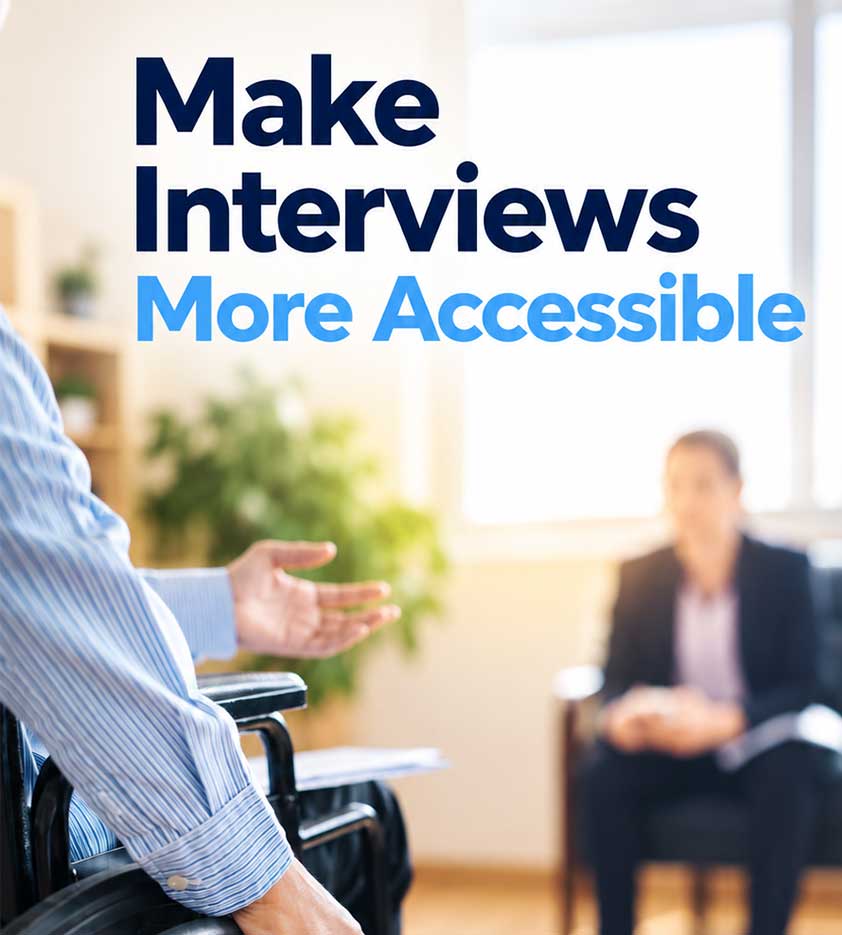
Make Interviews More Accessible


For some neurodivergent candidates, a conventional interview may test more than the skills needed for the job.
Acas guidance on neuroinclusive workplaces recommends several practical recruitment measures. These include using clear language, giving examples of reasonable adjustments, avoiding assumptions based on body language or social behaviour, considering sharing interview questions beforehand and providing quiet interview environments. It also suggests considering practical assessments where appropriate.
From a candidate perspective, these changes can matter before the interview has even started. Knowing what to expect and how to request an adjustment can reduce unnecessary uncertainty around the process.
It is also important not to assume that every neurodivergent or disabled candidate wants the same thing. An adjustment that helps one person may not help another. The conversation should focus on what the individual needs to participate effectively.
For recruiters, this means reviewing whether interview conventions are genuinely assessing the requirements of the role. Eye contact, rapid answers or performance in an unfamiliar environment may not always be relevant indicators.
Accessible recruitment is therefore partly about removing unnecessary barriers while keeping the assessment focused on the job.
Explore disabled and neurodivergent candidate outreach through Disability Network.