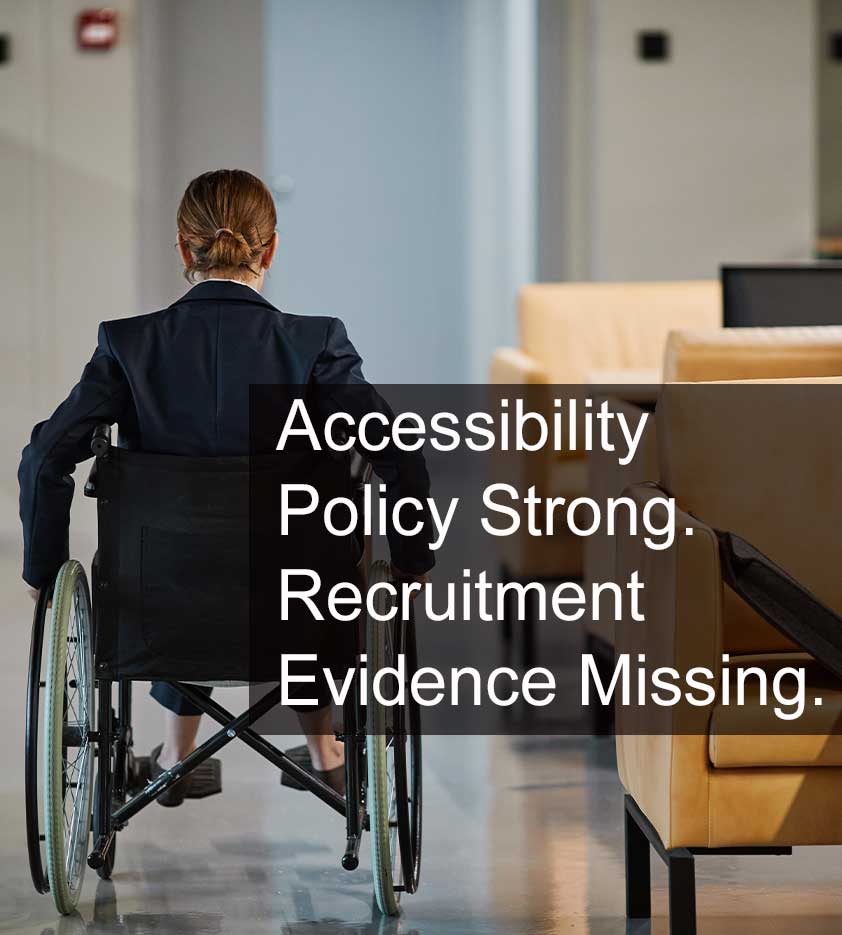
Accessibility Policy Strong. Recruitment Evidence Missing.


Your Accessibility Policy Is Strong. Your Recruitment Evidence May Not Match It.
Most organisations have done the visible work. Accessible premises. Assistive technology. Reasonable adjustment processes. But the route disabled candidates take to find your vacancies often runs through the same mainstream channels as every other employer. The sourcing strategy has not caught up with the policy.
Under the Public Sector Equality Duty, UK public bodies must actively advance equality of opportunity for disabled people. That duty extends to where you advertise, not just how you hire. Sourcing decisions sit within your recruitment governance framework. They are documentable, reviewable, and reportable.
Organisations with strong disability inclusion outcomes build this deliberately. They create dedicated sourcing routes into disability networks and specialist communities. They track what those routes produce. They report outcomes at board level and hold leaders accountable for them.
Further education colleges carry Ofsted obligations on workforce equality. Local authorities publish equality objectives and workforce data. Housing associations report to the Regulator of Social Housing. Government departments answer to parliamentary scrutiny. An accessibility statement demonstrates awareness. Vacancy level sourcing records demonstrate action.
The Disability Network connects your roles with an established community of disabled jobseekers and disability focused organisations across the UK. If your current sourcing records do not yet reflect the commitment in your equality policy, this is a practical starting point
Speak to us to find out how it works.